If you’re eating healthy but not losing weight, you’re not alone—and chances are you’re not doing something wrong.
This is one of the most common frustrations people face on their weight loss journey. You’re choosing whole foods, watching portion sizes, skipping the junk, maybe even adding more physical activity. On paper, it should be working.
But your scale isn’t moving.
From my own personal experience losing over 100 pounds—and working with women over 40 who feel stuck despite doing “everything right”—there are usually two missing pieces most people never consider:
-
Not being in a consistent calorie deficit
-
Your body not properly processing the food you’re eating
In this article, you’ll learn how both of these factors work together—why eating healthy doesn’t always lead to fat loss, and how digestion plays a key role in making a calorie deficit actually work.
Most advice only addresses one of these. But if either one is missing, fat loss becomes far harder than it needs to be.

Doing everything right—eating healthy and staying active—but the scale still isn’t moving can be one of the most frustrating parts of a weight loss journey.
Disclaimer: This article is for educational purposes only and does not replace medical advice. Always consult a qualified healthcare provider for diagnosis or treatment decisions. I’m not a doctor—I’m a health coach who lost over 100 pounds while improving my own digestive health using the same lifestyle changes I teach on my website and YouTube channel.
This article contains affiliate links. I only recommend products I personally use and trust.
Weight Loss Still Comes Down to a Calorie Deficit
Before anything else, let’s be clear about the foundation of fat loss.
Weight loss requires a calorie deficit. If your calorie intake isn’t lower than what your body burns through daily physical activity and basic metabolic needs, your body weight won’t go down long term.
As someone who lost over 100 pounds and has coached women through this process, this is the one piece that can’t be skipped.
However, that does not mean extreme dieting, rapid weight loss, or cutting out entire food groups. In fact, those approaches usually backfire.
But it does mean:
-
Paying attention to portion sizes
-
Being mindful of your total food intake
-
Prioritizing nutrient-dense foods over junk foods
-
Building a sustainable eating plan that results in fewer calories over time
Calories in versus calories out is the foundation of fat loss. Without it, even the healthiest foods—olive oil, nuts, whole grains, healthy fats—can still lead to weight gain if you’re consistently eating more than your body needs.
Why You’re Eating Healthy But Not Losing Weight
If you’re eating healthy but not losing weight, things can get frustrating fast.
Many people are eating lean proteins, whole grains, healthy meals, and minimal processed foods—and still not seeing results. Based on both my own experience and coaching others through this, these are some of the most common reasons why.
1. “Healthy” Doesn’t Always Mean Lower Calories
It’s very easy to eat a healthy diet without being in a calorie deficit.
Foods like nuts, olive oil, smoothies, and healthy recipes with calorie-dense ingredients can add up quickly. Even fruit juices and other liquid calories can increase calorie intake without making you feel full.
Even though your food choices may support overall health, they may not be creating the calorie deficit that’s necessary for fat loss.
2. You’re Not Eating as Little as You Think
This isn’t about blame—it’s about awareness.
Most people underestimate their portion sizes, the number of calories in meals, and how often they’re actually eating. Small things add up quickly:
- Extra bites while cooking
- Sauces and dressings
- “Just one more” snack
Over time, these small additions can quietly prevent a calorie deficit without you ever realizing it.
3. Your Body Is Fighting Your Best Efforts
This is the part that rarely gets talked about.
Even when someone is genuinely trying to eat less, their body can make it incredibly difficult to stick with it. This shows up as low energy levels, intense hunger, cravings, and feeling worse after eating—not better.
This is often where people assume it’s a willpower problem—but in many cases, it’s a sign that something deeper in the digestion process isn’t working the way it should.
Your Body Still Has to Process What You Eat
While a calorie deficit works on paper, your body still has to break down, process, and use the food you’re eating. Digestion isn’t just “eat → absorb → done.” It follows a sequence.

Digestion works in a specific sequence—when one step is under-supported, it can affect how your body breaks down and uses food.
From a functional digestion standpoint (and based on the Kick It Naturally approach I was trained in), your body relies on a specific order:
- Stomach acid to break food down
- Bile to emulsify fats
- Digestive enzymes to finish digestion and allow absorption
If one of these steps isn’t working properly, food doesn’t get fully broken down. And when that happens, your body doesn’t respond the way you expect.
When Digestion Isn’t Working, Weight Loss Feels Harder
While improving digestion doesn’t replace the need for a calorie deficit, it absolutely affects how easy or difficult it is to stay in one.
When digestion is off, you may notice:
- Bloating after eating healthy meals
- Fatigue or sluggishness instead of feeling energized
- Nausea after eating certain foods
- Urgent bowel movements after meals
- Greasy stool, pale stool, or other changes in bowel movements
These aren’t random symptoms. They can be signs your body may not be properly breaking down food—starting with stomach acid and continuing into bile flow and fat digestion.
When fat digestion isn’t working well (often due to poor bile flow), food feels heavy, sits longer, and leaves you feeling uncomfortable long after eating.
But that process often starts even earlier since if stomach acid isn’t doing its job, the rest of digestion doesn’t get the signal to work properly either.
This Is Why “Just Eat Less” Stops Working
On paper, eating fewer calories is the most straightforward path to weight loss. But in real life, if your body feels worse every time you eat, you won’t stick with eating less for very long.
When digestion is struggling:
- Your energy levels drop
- Your hunger and fullness signals become harder to manage
- Your blood sugar becomes less stable
- Your stress levels increase
Now you’re dealing with chronic stress, poor sleep, elevated cortisol levels, and over time this can contribute to issues like insulin resistance—all of which make weight management significantly more difficult.
So it’s not that calories don’t matter. It’s that your body isn’t supporting your weight loss efforts the way it should be. When you feel bad or stressed out, the last thing most people want to do is stick to a calorie deficit.
Other Reasons You’re Eating Healthy But Not Losing Weight
Beyond digestion and calorie intake, there are additional factors that can affect fat loss:
- Lack of sleep — less than 7–9 hours per night
- Chronic stress and elevated cortisol levels
- Hormonal changes, especially for women over 40
- Medical conditions like an underactive thyroid or polycystic ovary syndrome (PCOS)
- Low physical activity or inconsistent exercise
- Not building muscle with strength training or not eating enough protein, especially over 40
These factors can influence things like insulin sensitivity, hunger hormones like leptin, and overall energy levels.
If you suspect a medical reason is behind your plateau, it’s always best to work with a qualified healthcare provider.
Signs Your Body Isn’t Processing Food Properly
If you’re eating healthy and not losing weight, and you’re also noticing any of the following, there’s a good chance your digestion isn’t working the way it should:
- Bloating after meals
- Burping a lot after eating
- Fatigue after eating
- Nausea with fatty foods
- Urgent bowel movements
- Chronic constipation
- Pale or greasy stool
This can show up in different ways depending on where digestion is breaking down.
These symptoms can make your weight loss journey feel far harder than it needs to be—not because calories don’t matter, but because they make it harder to stay consistent with eating less and feeling good while doing it.
The good news is there are steps you can take to improve these symptoms in order to make your weight loss journey easier.
How to Support Digestion So Your Body Works With You
If your goal is fat loss, the most effective approach is to support digestion and maintain a calorie deficit. Not one or the other—both.
Because when your body is actually breaking down and using the food you’re eating, it becomes much easier to stay consistent with eating less, maintain stable energy levels, and avoid the cycle of feeling worse after every meal.
From a Kick It Naturally–aligned approach, this comes down to supporting digestion in the right order.
Step 1: Support Stomach Acid (When Needed)
Stomach acid helps initiate digestion and signals the rest of the digestive process to kick in. When stomach acid is too low, food doesn’t get broken down properly at the start—which can lead to bloating, burping after eating, and that heavy “food just sitting there” feeling.
It also affects everything that comes after it.
If this step isn’t working well, bile release and enzyme activity don’t get the proper signals, which means digestion stays incomplete further down the line.
In my own experience, and in the approach I use with clients, this step works best when it’s supported alongside bile flow—because improving stomach acid without addressing bile can sometimes make symptoms like urgency or loose stools worse.
Step 2: Support Bile Flow (Especially for Fat Digestion)
Bile is what allows your body to properly break down fats.
When bile isn’t flowing well, fats stay only partially digested—which can lead to nausea after eating, greasy or pale stool, urgency, or that uncomfortable heavy feeling after meals higher in fat—like eggs, avocado, fatty cuts of meat, cooking oils or dressings.
This is often where people start cutting out healthy fats, thinking the food is the problem. But in many cases, it’s not the food—it’s how your body is processing it.
Supporting bile flow helps your body actually handle these foods the way it’s supposed to.
This is where a supplement like Beet Flow can be helpful for some people. It’s designed to support bile flow so fats can be more effectively emulsified and broken down—rather than sitting in your system and causing symptoms.
If you want a full breakdown of how to use it and when it makes sense, you can read more about how to improve bile flow with Beet Flow here.
Step 3: Use Digestive Enzymes as Support
Digestive enzymes help finish breaking down food so it can be properly absorbed. But they’re not the starting point.
If stomach acid and bile flow aren’t working well, enzymes can only do so much—which is why so many people take them and still feel bloated or uncomfortable after eating.
When used in the right order, though, they can be a helpful addition.
A broad-spectrum enzyme like Digesti‑Zyme can help support the final step of digestion—helping your body more fully break down proteins, fats, and carbohydrates.
Think of enzymes as support—not the solution on their own.
Why A Digestion-First Approach Works
When you support digestion in the right sequence:
-
Food gets broken down more completely
-
You feel better after eating instead of worse
-
Your energy levels become more stable
-
It becomes easier to stay consistent with a calorie deficit
And that’s really the goal.
Fat loss still comes down to eating fewer calories over time—but when your body is working with you instead of against you, that process becomes much more sustainable and easier to maintain long term.
The Best Long-Term Approach to Weight Loss
If you’ve been stuck for a long time, the most effective and sustainable approach combines all of the following:
- A moderate calorie deficit — not extreme restriction
- Whole, nutrient-dense foods as the foundation of your eating plan
- Enough protein to support and preserve lean muscle mass
- Regular exercise — both strength training and increased activity
- Digestion support so your body can actually process what you eat
This combination helps support improvements in body composition, shifts the ratio of fat mass to lean muscle mass, boosts energy levels, and makes your weight loss goals feel achievable instead of a constant uphill battle.
Eating Healthy But Not Losing Weight: Final Thoughts
Eating healthy is an important part of better overall health. But it doesn’t automatically guarantee weight loss.
Fat loss still comes down to calorie intake versus calorie output. At the same time, your body has to be able to properly process the food you’re eating. When digestion isn’t working, everything else feels harder—staying consistent, managing hunger, keeping energy up, and sticking with an eating plan.
If you’re eating healthy but not losing weight despite doing everything right, it’s worth looking at both sides of the equation.
Because when you combine a sustainable calorie deficit with proper digestion support, it becomes much easier for your body to work with you instead of against you.
If you notice symptoms like bloating, fatigue after eating, or trouble digesting fats, that can be a sign your digestion may need support—and that’s a great place to start on your journey to a healthy weight.
About the Author
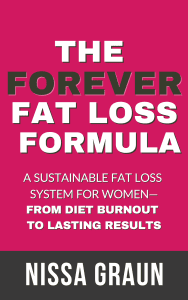
Nissa Graun is a health coach certified through the Kick It Naturally program, specializing in digestion-first strategies to support sustainable fat loss and digestive health. After losing over 100 pounds while navigating her own digestive challenges, she now helps women improve bile flow, stomach acid function, and overall gut health through practical, whole-food approaches. She is the author of The Forever Fat Loss Formula and shares digestion-focused fat loss strategies on her website and YouTube channel. Her approach is rooted in the principle that digestion works in a sequence—and supporting the right step can make all the difference.


Leave a Reply